Hyperkeratosis in Dogs: Causes, Care and Treatment
Everything you need to know about hyperkeratosis in dogs, causes, symptoms, home treatments like paw balm, and when to see your vet.
Quick answer
Hyperkeratosis in dogs is a condition where the body produces excess keratin, causing thick, rough, crusty growth on the paw pads or nose. It is not usually painful but can crack and become uncomfortable or infected if untreated. Regular moisturising with paw balm or coconut oil, gentle trimming, and veterinary check-ups keep it manageable.
If you’ve noticed your dog’s paw pads or nose looking unusually rough, thick, or crusty, you might be dealing with hyperkeratosis in dogs. It’s a surprisingly common condition that can look quite alarming but is usually very manageable once you understand what’s going on.
This guide covers everything you need to know, what causes it, which breeds are most prone, how to treat it at home, and when it’s time to see the vet.
Key takeaways
- Hyperkeratosis is excess keratin, thick, crusty skin on the paws or nose. It usually looks worse than it is.
- Most cases are managed at home, regular moisturising with paw balm or coconut oil, plus gentle trimming.
- Have your vet confirm the diagnosis first, a few more serious conditions look almost identical.
What Is Hyperkeratosis in Dogs?
Keratin is a tough, fibrous protein that forms the outer layer of skin, hair, and nails, in both dogs and humans. It’s the same protein that makes up your fingernails. In a healthy dog, keratin production is balanced: old skin cells are shed and replaced at a steady rate.
With hyperkeratosis, the body produces more keratin than it can shed. The excess builds up on the surface, creating thick, rough, sometimes horn-like growths. It most commonly appears on:
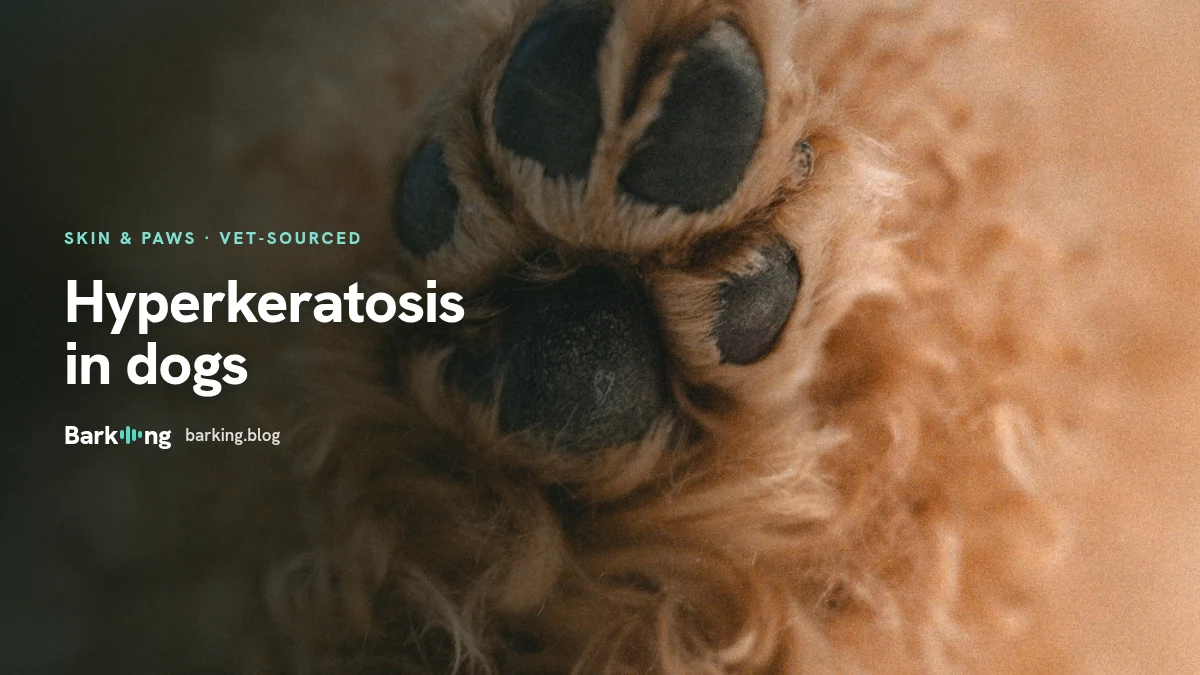
- Paw pads: the most common location. The pads develop a dry, cracked, crusty appearance, sometimes with hard protrusions that look like extra growths.
- Nose (nasal planum): the nose leather becomes dry, rough, and may crack or peel.
In mild cases, it’s mostly a cosmetic issue. But when the excess keratin builds up significantly, it can crack and create fissures that are painful and prone to infection. That’s why ongoing management matters.
One thing that reassures a lot of owners: because hyperkeratosis is the skin overproducing keratin rather than an infection, it isn’t contagious, your other dogs and your family can’t catch it. (A few uncommon underlying causes are separate diseases in their own right, which is one more reason to get a sudden or early case checked, but the thickened skin itself doesn’t spread.)
If your dog’s problem is mainly on the nose, our focused guides to nasal hyperkeratosis and a crusty dog nose go deeper on that; for sore, itchy pads, see natural remedies for itchy paws; and if it’s simply a dry nose rather than thickened crust, that’s usually a much smaller worry.
What Causes Hyperkeratosis?
There are several potential causes, and your vet can help determine which applies to your dog:
Idiopathic (no known cause): The most common type. The body simply overproduces keratin without any identifiable trigger. This is sometimes called “hairy paw” due to the feathery or horn-like appearance of the excess growth.
Hereditary/breed-related: Some breeds are genetically predisposed to hyperkeratosis. It may appear in puppyhood or develop as the dog ages.
Age-related: Older dogs commonly develop mild hyperkeratosis as skin cell turnover slows and keratin accumulates. This is often considered a normal part of ageing.
Underlying medical conditions:
- Canine distemper: dogs that have recovered from distemper sometimes develop “hard pad” disease, a form of hyperkeratosis
- Leishmaniasis: a parasitic disease that can cause nasal hyperkeratosis
- Autoimmune conditions: pemphigus and lupus can trigger excess keratin production
- Zinc deficiency: rare but can cause skin thickening and crusting
Which Breeds Are Prone to Hyperkeratosis?
While any dog can develop hyperkeratosis, certain breeds are more frequently affected:
- Labrador Retrievers: one of the most commonly affected breeds
- Golden Retrievers
- Irish Terriers: can develop a hereditary form called “digital hyperkeratosis”
- Dogues de Bordeaux
- Boxers
- English Bulldogs
- Cocker Spaniels
- Bedlington Terriers
If you own one of these breeds, it’s worth regularly checking their paw pads and nose for early signs of keratin buildup. Early intervention keeps it manageable.
Symptoms to Watch For
Hyperkeratosis develops gradually, so it’s easy to miss in the early stages. Here’s what to look for:
- Rough, dry paw pads that feel harder or thicker than normal
- Crusty, flaky nose that doesn’t improve with normal hydration
- Hard, horn-like growths protruding from the paw pads, these can look like small extra claws
- Cracking or fissures in the thickened skin
- Limping or reluctance to walk: if cracks are deep enough to cause pain
- Bleeding or discharge: a sign of infection in cracked areas
If you notice cracking, bleeding, or signs of pain, see your vet promptly. Secondary infections in cracked paw pads can become serious if untreated.
Home Treatment and Management
For mild to moderate hyperkeratosis, home care is usually effective. Here’s a practical routine:
Moisturising
Regular moisturising is the cornerstone of management:
- Paw balm: dog-specific paw balms containing shea butter, beeswax, or vitamin E are widely available and effective
- Coconut oil: unrefined, cold-pressed coconut oil is a safe, affordable option. It’s also safe if your dog licks it
- Apply before bed: this gives the product time to absorb overnight before your dog walks on their paws
Avoid human hand creams, petroleum jelly (which can be harmful if ingested in quantity), and anything containing essential oils, fragrances, or zinc oxide.
Gentle Trimming
If the excess keratin has formed hard protrusions or horn-like growths:
- Soak the paws in warm water for 5-10 minutes to soften the keratin
- Gently trim the softened excess with blunt-ended scissors or nail clippers, only remove the clearly hardened excess, never cut into live tissue
- Apply paw balm immediately after trimming
- If you’re not confident doing this yourself, your vet or a groomer can help
Protective Measures
- Dog boots: useful on rough surfaces to prevent further irritation
- Avoid hot pavement: rough, hot surfaces worsen the condition
- Keep nails trimmed: overgrown nails alter how your dog bears weight, putting extra pressure on paw pads
When to See Your Vet
See a vet now if
- The thickening appeared suddenly or is getting noticeably worse.
- There are deep cracks that bleed or ooze, or your dog is limping or in pain.
- Your dog is under two, or you also notice lethargy, weight loss, or skin changes elsewhere, these can point to an underlying condition that needs treating.
While mild hyperkeratosis is manageable at home, see your vet if:
- The condition appears suddenly or worsens rapidly
- There are deep cracks that bleed or ooze
- Your dog is limping or showing signs of pain
- The nose is severely affected, cracking, bleeding, or losing pigment
- Home treatments aren’t improving things after 2-3 weeks
- Your dog is young (under 2 years), early onset may indicate a hereditary or immune condition
- You notice other symptoms like lethargy, weight loss, or skin changes elsewhere
Your vet may recommend prescription-strength keratolytic ointments, antibiotics for secondary infections, or further investigation if an underlying condition is suspected.
Prevention and Long-Term Care
Since many cases of hyperkeratosis are genetic or idiopathic, complete prevention isn’t always possible. However, you can reduce severity and prevent complications:
- Regular paw checks: make it part of your grooming routine to inspect paw pads weekly
- Keep paws moisturised: even before hyperkeratosis appears, regular paw balm use helps maintain healthy pads
- Balanced diet: ensure your dog’s food provides adequate zinc and essential fatty acids, which support skin health
- Stay on top of vaccinations: canine distemper vaccination prevents one known cause of hyperkeratosis
- Avoid prolonged contact with harsh surfaces: concrete, salt-treated roads, and very hot or very cold surfaces all stress paw pads
Hyperkeratosis is a lifelong condition in most cases, but with consistent care it rarely impacts your dog’s quality of life. The key is making paw maintenance a regular habit rather than waiting for problems to develop.
Sourced to
Is hyperkeratosis in dogs painful?
Mild hyperkeratosis is typically not painful, though the rough texture can be uncomfortable. However, if the excess keratin cracks deeply, it can expose sensitive tissue underneath, causing pain and increasing the risk of infection. Regular maintenance prevents it from reaching this stage.
Can I use human moisturiser on my dog's paws?
It is best to avoid human moisturisers, as many contain fragrances, essential oils, or ingredients like zinc oxide that are toxic to dogs if licked. Use a dog-specific paw balm or plain, unrefined coconut oil instead, both are safe if your dog licks their paws.
Is hyperkeratosis in dogs curable?
Hyperkeratosis is generally a manageable condition rather than a curable one. Idiopathic and hereditary forms require ongoing maintenance, regular moisturising and gentle trimming. If the hyperkeratosis is caused by an underlying condition like an autoimmune disorder, treating that condition may improve the symptoms.
What breeds are most prone to hyperkeratosis?
Breeds commonly affected include Labrador Retrievers, Golden Retrievers, Irish Terriers, Dogues de Bordeaux, Boxers, and English Bulldogs. However, any breed can develop hyperkeratosis, particularly as they age.
How often should I apply paw balm for hyperkeratosis?
For mild cases, applying paw balm or coconut oil 2-3 times per week is usually sufficient. For more severe cases, daily application may be needed. Apply before bedtime so it has time to absorb before your dog walks on treated paws.
Will hyperkeratosis in dogs go away on its own?
No, it does not usually clear up by itself. Hyperkeratosis is a condition you manage rather than one that self-heals: without regular softening and moisturising, the excess keratin tends to build up, and in some dogs it slowly worsens. Steady home care keeps it comfortable, and if an underlying illness is driving it, treating that can improve the skin. What it will not do is simply resolve if left alone.
Is hyperkeratosis in dogs contagious?
No. Hyperkeratosis is not an infection, it simply means the skin is making more keratin than it sheds, so it does not spread from dog to dog or to people, and your other pets cannot catch it. The only nuance is that a few of its less common underlying causes, such as distemper or leishmaniasis, are separate diseases with their own risks, which is one reason an early, sudden or unusual case is worth a vet check. The thickened skin itself, though, is not something you can pass on.
What is the best cream for hyperkeratosis in dogs?
For everyday care, a dog-specific paw and nose balm (look for shea butter, beeswax and vitamin E) or plain unrefined coconut oil is the sensible first choice, and it is safe if your dog licks it. For thick, stubborn or cracked cases your vet may prescribe a stronger keratolytic ointment to break down the excess keratin. Avoid human foot creams, which can contain ingredients that are not safe for a dog to lick off.
The Barking newsletter
Get calmer, vet-sourced advice.
One friendly email when we publish something worth your dog’s while. No spam, no scares.