Itchy Paws in Dogs: Natural Remedies
Why dogs get itchy paws and the natural remedies that really soothe, paw soaks, wiping, oatmeal, omega-3, plus when itching means a vet visit.
Quick answer
Most itchy paws in dogs come from allergies, to pollen, grass, food or dust, or a yeast build-up between the toes. Gentle home care like wiping paws after walks, cool paw soaks and colloidal oatmeal genuinely soothes the itch, but it will not fix the underlying cause, so see your vet if the itching keeps coming back.
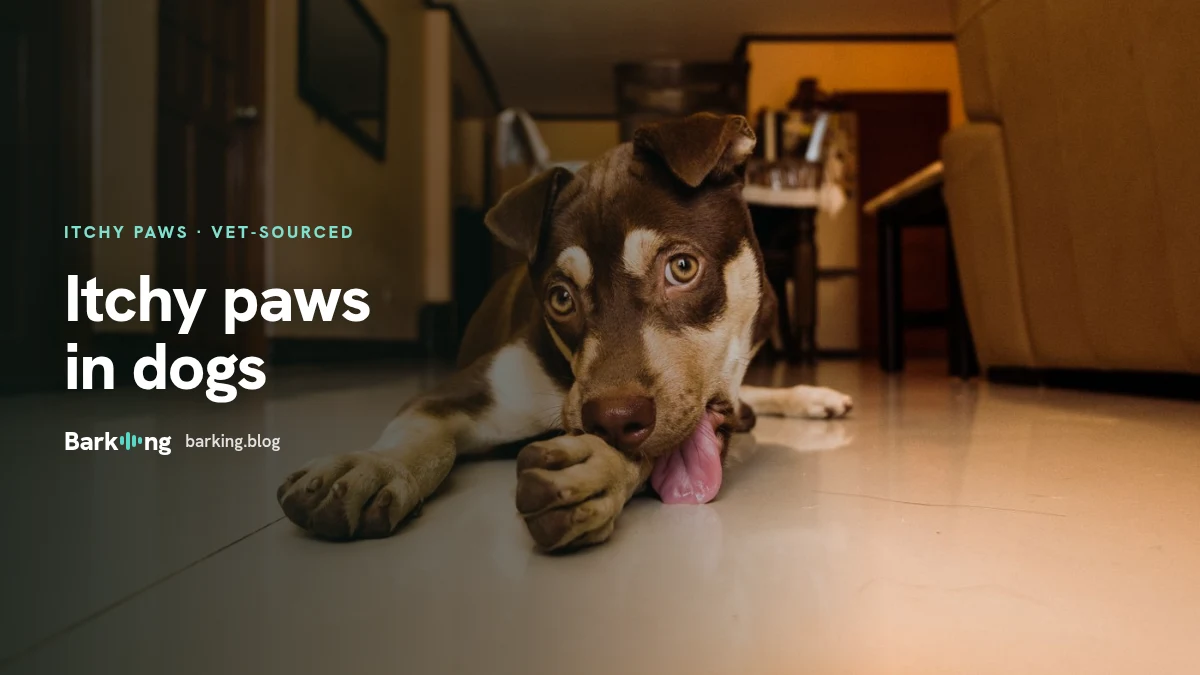
If your dog is forever licking, chewing or nibbling at their paws, the itch is almost always coming from an allergy, to pollen, grass, dust mites or, less often, food, or from a yeast build-up between the toes. Gentle home care can take the edge off that itch and make your dog far more comfortable, but it is important to be honest from the start: these remedies soothe the symptom, they do not cure the cause. If the itching is constant or keeps returning, your dog needs a vet to find and treat what is actually driving it.
Key takeaways
- Itchy paws are usually a sign of an allergy, the feet are one of the first places an environmental or food allergy shows up.
- Home remedies like wiping paws after walks, cool soaks and oatmeal soothe the itch, but they do not fix an underlying allergy or infection.
- Constant licking, redness, a yeasty smell, limping or sores mean it is time to see your vet, not reach for another home fix.
Why are my dog’s paws so itchy?
Paws take a lot of punishment, they are in constant contact with grass, pavements, pollen and everything your dog walks through. When they start itching, there are a handful of usual suspects. It is worth knowing which is which, because the right home care (and the point at which you need a vet) depends on the cause.
Environmental and seasonal allergies. This is the big one. Vets call it atopic dermatitis, which simply means an allergy to things in the environment, grass and tree pollens, mould spores and house dust mites. The Merck Veterinary Manual notes that with these airborne allergies the feet, face, ears and tummy are the most commonly affected areas, and that licking or chewing the paws is a classic sign. It usually first appears when a dog is between about six months and three years old, and pollen allergies often flare in spring and summer.
Food sensitivity. Less common than environmental allergies, but real. A food allergy can show up as itchy skin and itchy feet rather than an upset tummy. The only reliable way to pin it down is a vet-guided exclusion diet over several weeks, home guesswork rarely gets there.
Contact irritants. Sometimes it is simply what the paws have touched: freshly cut grass, pollen, lawn treatments, cleaning products on your floors, or road salt and grit in winter. De-icing salt is a common cold-weather culprit that stings and dries the pads.
Yeast overgrowth between the toes. Warm, damp spaces between the toes are the perfect home for a normal skin yeast (called Malassezia) to overgrow. As the University of Illinois College of Veterinary Medicine explains, this yeast thrives in the moist skin between the toes and around the nails, leaving the skin red, greasy and often brown-stained, and it is intensely itchy. Many owners notice a distinctive musty, yeasty smell. Yeast almost always rides in on top of an allergy, so it needs a vet, not just a rinse.
Dryness and cracked pads. Cold weather, central heating, harsh surfaces and over-washing can leave pads dry and rough. If the pads themselves are thickened, crusty or horn-like rather than just dry, read our guide to hyperkeratosis in dogs, which covers that specific problem in detail.
Blue Cross explains that a dog with atopy (environmental skin allergies) becomes very itchy and scratches throughout the day and night, biting, licking, chewing or rubbing at their paws, along with their ears, face, belly and other areas.
Verified sourceBlue Cross UK · read the source →
What actually helps at home (and what to be careful with)
Here is the honest version. Good home care can rinse away triggers, calm inflamed skin and break the itch-lick cycle that makes everything worse. None of it treats the root cause. Think of these as comfort and support alongside, never instead of, a proper diagnosis when the itch is persistent.
| Remedy | Helps with | How to use | Caution |
|---|---|---|---|
| Wipe paws after walks | Clears off pollen, grass, dust and de-icing salt before your dog licks them | Wipe each paw and between the toes with a damp cloth or a plain pet wipe when you come in, then pat dry | Dry well between the toes, trapped damp encourages yeast |
| Cool paw soak | Takes the heat out of hot, itchy paws and rinses off allergens | Stand the paws in cool-to-lukewarm water for a few minutes, then pat dry | Never hot water, it dries the skin and worsens the itch; not a fix for infection |
| Colloidal oatmeal soak | Soothes mild, general itching and dryness (a recognised skin protectant) | Blend plain oats to a fine powder, stir into lukewarm water until milky, soak the paws around 10 minutes, then rinse | Plain oats only, never instant or flavoured; will not clear a yeast or bacterial infection |
| Coconut oil | May soften genuinely dry, cracked pads | A thin smear of plain, unrefined oil on dry pads, see our coconut oil for dogs guide | Evidence is limited and anecdotal; can make some dogs lick more or irritate skin, stop if worse |
| Diluted apple cider vinegar rinse | Sometimes used to freshen yeasty-smelling paws | Only ever well diluted, see how to dilute apple cider vinegar, and patch-test first | Never on raw, broken or open skin, it stings badly; benefit is unproven |
| Omega-3 in the diet | Supports the skin barrier and can reduce itch over several weeks | Ask your vet about a fish-oil or omega-3 supplement suited to your dog's size | Works slowly and only helps some dogs; rarely enough on its own |
A quick word on the two remedies owners ask about most. Colloidal oatmeal, plain oats ground to a fine powder, is a genuinely useful soother: it is an anti-inflammatory skin protectant that calms mild, itchy, irritated skin, which is why so many dog shampoos are oatmeal-based. Use lukewarm water, never hot, and remember it comforts the skin rather than curing what is irritating it. Omega-3 is the one dietary change with reasonable science behind it, in a veterinary study, dogs given an omega-3 (fish and flax oil) supplement showed a clear improvement in their skin over roughly ten weeks compared with dogs given a dummy oil. It is slow and it is not a magic bullet, but as a long-term support it is worth asking your vet about.
A simple after-walk paw routine
If your dog is prone to itchy feet, especially in pollen season or when the pavements are salted, a two-minute routine at the door makes a real difference. UK charity the PDSA specifically advises brushing or rinsing dust, grasses and pollen off your dog after walks so there is less for them to react to.
- Wipe each paw, one at a time, with a damp cloth or plain pet wipe, over the top and underside of the foot.
- Check between the toes, gently spread the toes and look for redness, brown staining, a grass seed, thorn or grit lodged in the skin.
- Dry thoroughly, pat the whole paw dry, paying real attention to the gaps between the toes, because trapped damp is what lets yeast take hold.
- Soothe if needed, for hot, itchy paws, a quick cool or colloidal-oatmeal soak takes the sting out; pat dry again afterwards.
- Keep it up, daily through pollen season and after every salted-pavement winter walk is far more effective than the occasional deep clean.
What actually helps versus what is a myth
The internet is full of confident cures for itchy paws. Most of the popular “natural” fixes are, at best, mild soothers, and a couple can do harm. Here is where the honesty matters most on a health topic.
Apple cider vinegar is probably the most over-sold. A well-diluted rinse might freshen a yeasty paw, but the evidence is anecdotal, not proven, and the safety rules are non-negotiable: never use it on raw, broken or open skin, always water it right down, and patch-test a small area first and wait a day before doing more. If a paw is already red, sore and inflamed, vinegar can turn a manageable itch into a miserable one, and if there is a genuine yeast problem, that is a vet job. Our guides on diluting apple cider vinegar and apple cider vinegar for a dog’s yeast infection go into this properly.
Coconut oil gets similar hype. It may soften dry pads, but as the American Kennel Club points out, there is no clear scientific evidence that it helps canine skin disease, and it can even encourage a dog to lick the area more. Use it sparingly on dry pads if at all, and not as a treatment for an itchy allergy. If you have seen the two blended into a single spray, we weigh up whether that popular combination is worth it in mixing coconut oil and apple cider vinegar for dogs.
And one clear “do not”: never give your dog human antihistamines or other human medicines to stop the itch without your vet’s say-so. The PDSA warns that some can be dangerous for dogs. If the itch is bad enough that you are reaching for tablets, that is the signal to phone the vet, not the medicine cabinet.
The thread running through all of this: home care is for comfort and prevention. The moment itchy paws look like more than a mild, passing irritation, the kindest and most effective thing you can do is get a diagnosis.
See a vet if
- Your dog licks or chews their paws almost constantly, or cannot seem to settle.
- The skin is red, swollen, sore, weepy or bleeding, or there are sores or ulcers.
- You notice a musty, yeasty smell or brown staining between the toes.
- There is hair loss, thickened or darkened skin, or your dog is limping or holding a paw up.
- The itching keeps coming back, or home care has not helped within a week or two.
Itchy paws are one of those problems where a little everyday care goes a long way, a wipe at the door, a cool soak on a bad day, a healthy diet with the right fats. Just keep the whole picture in mind. If the soothing is not holding, or you are seeing the warning signs above, your vet can find the allergy or infection behind it and give your dog real, lasting relief. Home remedies make the wait more comfortable; they are not the finish line.
Why does my dog keep licking and chewing their paws?
The most common reason is an allergy, to something in the environment like pollen, grass or dust mites, or sometimes to food. Licking and chewing can also point to a yeast build-up between the toes, a grass seed or splinter stuck in the skin, or a sore paw. An occasional lick is normal; near-constant licking or chewing is your dog telling you something is uncomfortable, so it is worth a vet check.
Is apple cider vinegar safe for my dog's itchy paws?
Only if it is properly diluted (well watered down) and the skin is completely intact. Never put apple cider vinegar on raw, broken, cut or open skin, it stings badly and can make things much worse. Patch-test a small area first and wait a day to check for any reaction. Be honest with yourself about the evidence, too: any benefit is anecdotal rather than proven, so it soothes at best and never treats an underlying allergy.
Does coconut oil stop itchy paws?
A thin smear may soften genuinely dry, cracked pads, but the scientific evidence for coconut oil on dog skin is limited, and some vets warn it can encourage more licking or irritate sensitive skin. It is not a treatment for an allergy or infection. If you want to try it on dry pads, use a tiny amount of plain, unrefined coconut oil and stop if the itching gets worse.
How can I calm my dog's itchy paws naturally at home?
Wipe or rinse the paws after every walk to clear off pollen, grass and salt before your dog licks them, dry carefully between the toes, and use a cool paw soak or a colloidal oatmeal soak to take the heat out of an itch. Ask your vet about adding an omega-3 supplement to support the skin. These steps soothe and support, they do not cure an allergy, so pair them with a vet diagnosis if the itch is persistent.
When should I take my dog to the vet for itchy paws?
Book a vet visit if your dog licks or chews their paws almost constantly, if the skin is red, swollen, sore, weepy or bleeding, if you notice a musty or yeasty smell or brown staining between the toes, if there is hair loss or your dog is limping, or if home care has not helped within a week or two. Itchy skin is genuinely uncomfortable and usually gets worse when it is left alone.
The Barking newsletter
Get calmer, vet-sourced advice.
One friendly email when we publish something worth your dog’s while. No spam, no scares.