Why Is My Dog's Nose Dry? Causes and When to Worry
Wondering why your dog's nose is dry? Learn the common causes, when it's normal, and when a dry nose means a vet visit is needed.
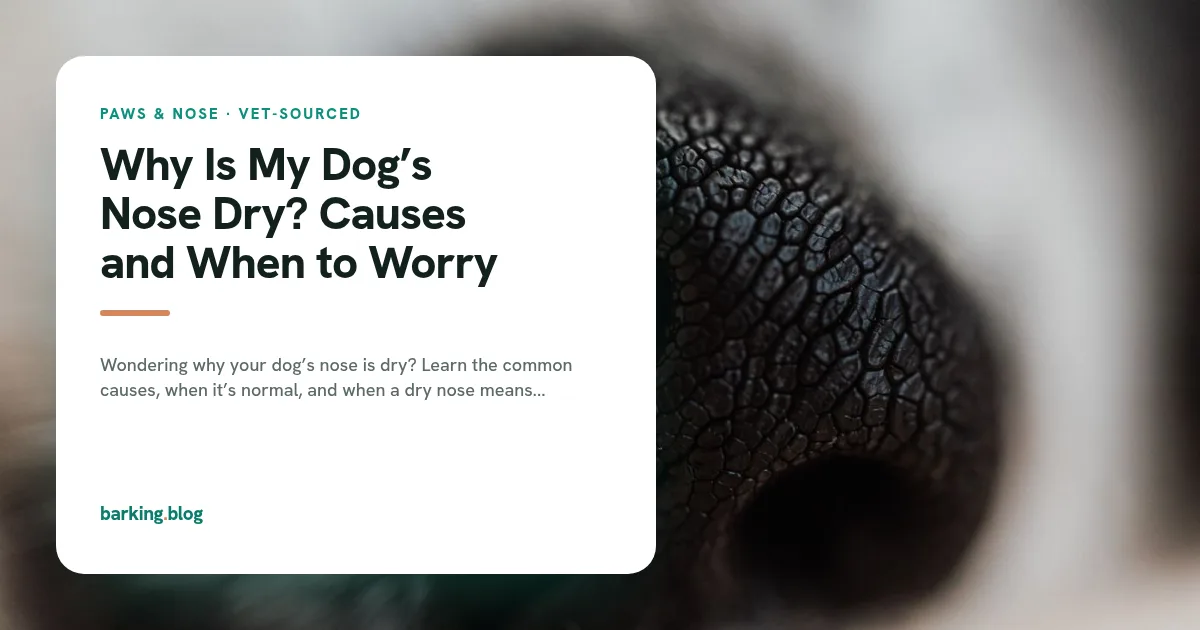
Quick answer
A dry dog nose is usually completely normal, dogs' noses dry out during sleep, in warm weather, and as they age. It only becomes a concern when accompanied by other symptoms like cracking, discharge, lethargy, or loss of appetite.
If you’ve ever looked at your dog and wondered “why is my dog’s nose dry?”, you’re not alone. Most dog owners have been taught that a wet nose means a healthy dog, but that’s actually a myth. A dry nose is perfectly normal in many situations, and it rarely signals anything serious on its own.
Key Takeaway
A dry dog nose is usually harmless and caused by sleep, weather, or age. It's only a concern when paired with other symptoms like cracking, discharge, or behavioural changes.
In this guide, we’ll walk through the normal reasons your dog’s nose might be dry, the less common causes that do need attention, and exactly when it’s time to book a vet appointment.
Why Do Dogs Have Wet Noses in the First Place?
Before we cover dry noses, it helps to understand why dogs’ noses are typically wet. Dogs secrete a thin layer of mucus from their nasal glands, which helps them absorb scent chemicals from the air. They also lick their noses frequently, adding another layer of moisture.
This moisture serves two purposes:
- Enhanced smell: a wet surface captures scent particles more effectively
- Temperature regulation: dogs don’t sweat like we do, and evaporation from the nose helps cool them down
So a wet nose isn’t a health indicator, it’s a sensory tool. And when conditions change, so does the moisture level.
Normal Reasons Your Dog’s Nose Is Dry
In most cases, a dry nose is nothing to worry about. Here are the most common harmless causes:
- After sleeping: dogs don’t lick their noses while asleep, so they naturally dry out during naps. This is the most common reason owners notice a dry nose. The opposite pattern, constant nose licking, usually points at irritation rather than dryness.
- Weather and climate: cold, dry winter air and central heating can sap moisture from your dog’s nose, just as they dry out your own skin.
- After exercise: mild dehydration from a long walk or play session can temporarily dry the nose.
- Age: older dogs tend to produce less nasal mucus, leading to a chronically drier nose. This is normal and rarely a problem on its own.
- Sun exposure: lying in a sunny spot can dry the nose out, particularly in lighter-skinned dogs.
When a Dry Nose Could Signal a Problem
While most dry noses are harmless, certain patterns warrant closer attention:
Dehydration: If your dog hasn’t been drinking enough water, a dry nose may be one of several signs. Look for tacky or pale gums, reduced energy, and decreased skin elasticity alongside the dry nose.
Fever: A warm, dry nose combined with lethargy, shivering, or loss of appetite could indicate your dog is running a temperature. The only reliable way to check is with a rectal thermometer, a normal canine temperature is between 38°C and 39.2°C.
Nasal hyperkeratosis: This condition causes an overproduction of keratin on the nose, leading to a thick, crusty, cracked surface. It’s more common in older dogs and certain breeds. It’s not usually painful but does need management.
Autoimmune conditions: Conditions like pemphigus or lupus can cause nasal dryness, crusting, and sores. These are uncommon but require veterinary diagnosis and treatment.
Allergies: Environmental or food allergies can cause nasal dryness alongside other symptoms like itching, sneezing, or watery eyes.
Home Remedies for a Mildly Dry Nose
If your dog’s nose is a bit dry but otherwise healthy, a few simple steps can help:
- Keep them hydrated: ensure fresh water is always available, and consider adding a splash of water to their food.
- Use a nose balm: pet-safe nose balms are widely available and provide a protective, moisturising layer. Look for products with shea butter, coconut oil, or beeswax.
- Coconut oil: a thin layer of virgin coconut oil can soothe mild dryness. It’s safe if your dog licks it off.
- Avoid harsh conditions: if your home is very dry in winter, a humidifier can help both you and your dog.
- Sun protection: for dogs with light-coloured noses, pet-safe sunscreen can prevent sun-related dryness and burning.
When to See the Vet About a Dry Nose
Book a vet appointment if your dog’s dry nose comes with any of these:
- Cracking or bleeding: persistent cracks that don’t heal with basic moisturising
- Discharge: any coloured mucus (green, yellow, or bloody) from the nostrils
- Loss of pigmentation: colour changes on the nose surface
- Sores or lesions: open wounds or crusty patches that worsen over time
- Behavioural changes: lethargy, loss of appetite, excessive sleeping, or reluctance to move
- Other symptoms: vomiting, diarrhoea, coughing, or difficulty breathing
Your vet can run tests to check for infections, autoimmune conditions, or other underlying causes. Early diagnosis makes treatment far more straightforward.
Is a dry nose a sign my dog is sick?
Not on its own. A dry nose is only concerning when paired with other symptoms such as lethargy, loss of appetite, nasal discharge, or cracked and bleeding skin. Many healthy dogs have dry noses at various points throughout the day.
Should I put coconut oil on my dog's dry nose?
Coconut oil is generally considered safe for dogs and can help moisturise a mildly dry nose. Apply a small amount and let it absorb. However, if the dryness is severe or persistent, consult your vet before relying on home remedies.
Why is my dog's nose dry and cracked?
Cracking can indicate nasal hyperkeratosis, sunburn, allergies, or an autoimmune condition. If your dog's nose is consistently cracked or bleeding, a vet visit is recommended to rule out underlying health issues.
Do certain dog breeds have drier noses?
Yes. Brachycephalic breeds like Bulldogs and Pugs often have drier noses because they struggle to lick them effectively. Some breeds are also more prone to nasal hyperkeratosis, where excess keratin builds up on the nose.
How can I tell if my dog is dehydrated?
Check for a dry nose combined with tacky gums, sunken eyes, reduced skin elasticity (gently pinch the skin on the back of the neck, it should spring back quickly), and lethargy. If you suspect dehydration, offer fresh water and contact your vet.
The Barking newsletter
Get calmer, vet-sourced advice.
One friendly email when we publish something worth your dog’s while. No spam, no scares.