How to Stop a Dog Licking a Wound: Safe, Effective Methods
Proven ways to stop your dog licking a wound, from e-collars and recovery suits to distraction techniques and proper wound care.
Quick answer
The most reliable way to stop a dog licking a wound is a physical barrier, an e-collar (cone), recovery suit, or protective bandage. Combine this with distraction techniques like frozen Kongs and puzzle feeders, and follow your vet's wound care instructions to support healing.
Knowing how to stop a dog licking a wound is one of those things every dog owner needs at some point, whether it’s a surgical site, a cut from the park, or a scrape that just won’t heal because your dog won’t leave it alone. The instinct to lick injuries is deeply hardwired in dogs, but it does far more harm than good. Here’s how to protect the wound and keep your dog comfortable during recovery.
Key Takeaway
Dog saliva doesn't heal wounds, it introduces bacteria and delays recovery. Use a physical barrier (cone, recovery suit, or bandage) combined with distraction to keep your dog from licking while the wound heals.
Why Wound Licking Is Harmful, Not Helpful
There’s a persistent myth that dog saliva has healing properties. While saliva does contain some antimicrobial compounds, the reality is that a dog’s mouth also harbours hundreds of species of bacteria. Licking a wound introduces these bacteria directly into broken skin, significantly increasing the risk of infection.
Beyond infection, persistent licking causes other problems:
- Delayed healing: Constant moisture and friction from the tongue breaks down new tissue as it forms, slowing the healing process.
- Stitch damage: Dogs can pull out surgical stitches or staples by licking, potentially reopening a wound and requiring another vet visit.
- Lick granulomas: Obsessive licking of one area can create a thickened, raw sore that becomes a chronic problem, a cycle of licking, inflammation, and more licking.
- Self-trauma: Some dogs lick so aggressively that they create new wounds or enlarge existing ones.
Veterinary professionals are clear on this: preventing wound licking is a key part of post-surgical care and general wound management.
The E-Collar (Cone of Shame): Still the Gold Standard
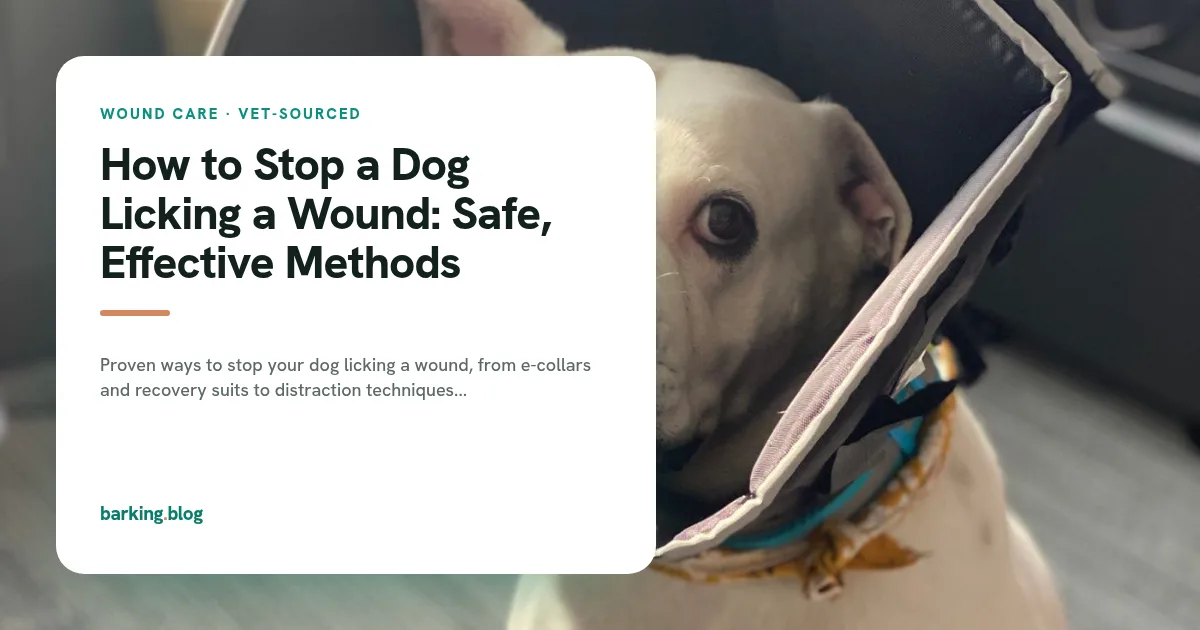
The Elizabethan collar, the classic plastic cone, remains the most reliable way to prevent wound licking. It’s not the most popular option with dogs or their owners, but it works.
Pros:
- Highly effective for wounds anywhere on the body
- Inexpensive and widely available
- Comes in clear plastic so your dog can still see
- Your vet will usually provide one after surgery
Cons:
- Dogs often find them stressful initially
- Can bump into furniture, walls, and doorframes
- Makes eating and drinking awkward (raise the bowls)
- Some dogs become anxious or refuse to move
Tips for making it easier:
- Introduce the cone with treats and calm praise, don’t just force it on
- Make sure it’s the right size: your dog’s nose should not extend past the cone’s edge
- Supervise mealtimes and consider removing the cone briefly for eating if you can watch them
- Keep doorways clear and move fragile items out of your dog’s new, wider turning radius
Most dogs adjust to a cone within 24 to 48 hours, even if the first few hours involve some dramatic sulking.
Cone Alternatives That Actually Work
If your dog truly can’t cope with a traditional cone, or if the wound location makes a cone impractical, several alternatives are worth trying:
Inflatable recovery collars look like travel neck pillows. They restrict neck movement enough to prevent licking of body wounds, but dogs with long muzzles may still reach their paws or legs. They’re more comfortable than rigid cones and don’t block peripheral vision.
Soft fabric cones are lighter and more flexible than plastic. They fold back when your dog bumps into things, reducing stress. However, determined dogs can sometimes bend them enough to reach the wound.
Recovery suits (medical bodysuits) are excellent for wounds on the torso, chest, or abdomen. They cover the wound like a onesie, preventing access while still allowing your dog to move freely. They’re particularly popular after spay/neuter operations.
Protective bandaging works for limb and paw wounds. Your vet can apply a proper bandage, and you can cover it with a dog boot or sock for extra protection. Check bandages regularly, they should be clean, dry, and not too tight.
Distraction Techniques to Reduce the Urge
A physical barrier does the heavy lifting, but distraction helps your dog cope with the frustration of not being able to lick:
- Frozen Kongs and lick mats: Give your dog something they’re allowed to lick. A frozen Kong stuffed with peanut butter or wet food provides 20-30 minutes of focused, appropriate licking.
- Puzzle feeders: Scatter feeding or puzzle toys keep your dog’s mind busy during recovery downtime.
- Gentle training sessions: Short, positive training sessions (sit, paw, touch) give your dog mental stimulation without physical strain.
- Calm company: Simply being in the room with your recovering dog reduces anxiety. Many dogs lick more when left alone because stress increases the urge.
- Appropriate chew toys: Long-lasting chews give your dog an oral activity that isn’t wound licking.
Avoid high-energy play that could disturb the wound. The goal is to keep your dog’s mind occupied and stress levels low during recovery.
Proper Wound Care During Recovery
Good wound management reduces itching and discomfort, which in turn reduces your dog’s urge to lick:
- Follow your vet’s instructions exactly. Clean the wound with the solution they recommend, at the frequency they advise. Don’t improvise.
- Keep the wound dry. Avoid baths and swimming until your vet gives the all-clear. If the wound gets wet, pat it dry gently with a clean cloth.
- Monitor daily. Check the wound at least twice a day for signs of infection: increased redness, swelling, warmth, discharge, or a foul smell.
- Don’t apply human products. Antiseptic creams, hydrogen peroxide, and other human wound products can be toxic to dogs or delay healing. Use only vet-recommended products.
- Keep your dog’s nails trimmed. If they can’t lick, they may try to scratch instead. Short nails reduce the risk of scratching damage.
When to Call the Vet
Contact your vet if:
- The wound looks infected (redness, swelling, discharge, bad smell)
- Your dog has pulled out stitches or staples
- The wound is bleeding again after initially stopping
- Your dog seems to be in increasing pain (whimpering, guarding the area, appetite loss)
- You can’t keep your dog from reaching the wound despite trying multiple barrier methods
- Your dog has stopped eating, drinking, or moving normally
It’s always better to call your vet with a concern that turns out to be minor than to wait while a problem gets worse. Most veterinary practices are happy to answer post-operative questions over the phone.
Helping Your Dog Heal Comfortably
Stopping your dog from licking a wound isn’t cruel, it’s essential care. The right barrier, some well-timed distractions, and proper wound management will get your dog through the healing period safely. Most dogs adjust to a cone or recovery suit within a day or two, and the temporary inconvenience is far better than the alternative: infection, reopened wounds, or a chronic licking habit.
Be patient, be consistent, and follow your vet’s advice. Your dog will be back to their normal, healthy self before you know it.
Is it OK to let a dog lick its wound?
No. While a small amount of licking is a natural instinct, excessive licking introduces bacteria from the mouth into the wound, delays healing, and can cause infection or lick granulomas. Veterinary professionals consistently advise preventing wound licking.
How long should a dog wear a cone after surgery?
Most vets recommend keeping the cone on for 10 to 14 days after surgery, or until the stitches are removed and the wound has fully closed. Your vet will advise on the specific timeline for your dog's procedure.
What can I use instead of a cone to stop my dog licking?
Alternatives include inflatable recovery collars, soft fabric cones, medical recovery suits (body suits), and protective bandaging. The best option depends on the wound's location and your dog's temperament. Recovery suits work particularly well for body wounds.
Can I put a sock on my dog's paw to stop licking?
A clean sock secured with medical tape (not too tight) can work as a temporary barrier for paw wounds. However, it's not a long-term solution, dogs can easily remove socks, and the wound still needs regular cleaning and monitoring. A proper vet bandage or boot is more effective.
Why does my dog keep licking the same spot even after it's healed?
Habitual licking of a healed area can become a compulsive behaviour, sometimes resulting in a lick granuloma. The area may also still be itchy as scar tissue forms. If your dog keeps licking a fully healed wound, consult your vet to rule out lingering irritation and discuss behaviour management.
The Barking newsletter
Get calmer, vet-sourced advice.
One friendly email when we publish something worth your dog’s while. No spam, no scares.