How to Apply Coconut Oil to Dogs' Ears: A Step-by-Step Guide
Learn how to apply coconut oil to dogs' ears safely for cleaning, soothing irritation, and supporting ear health with this step-by-step guide.
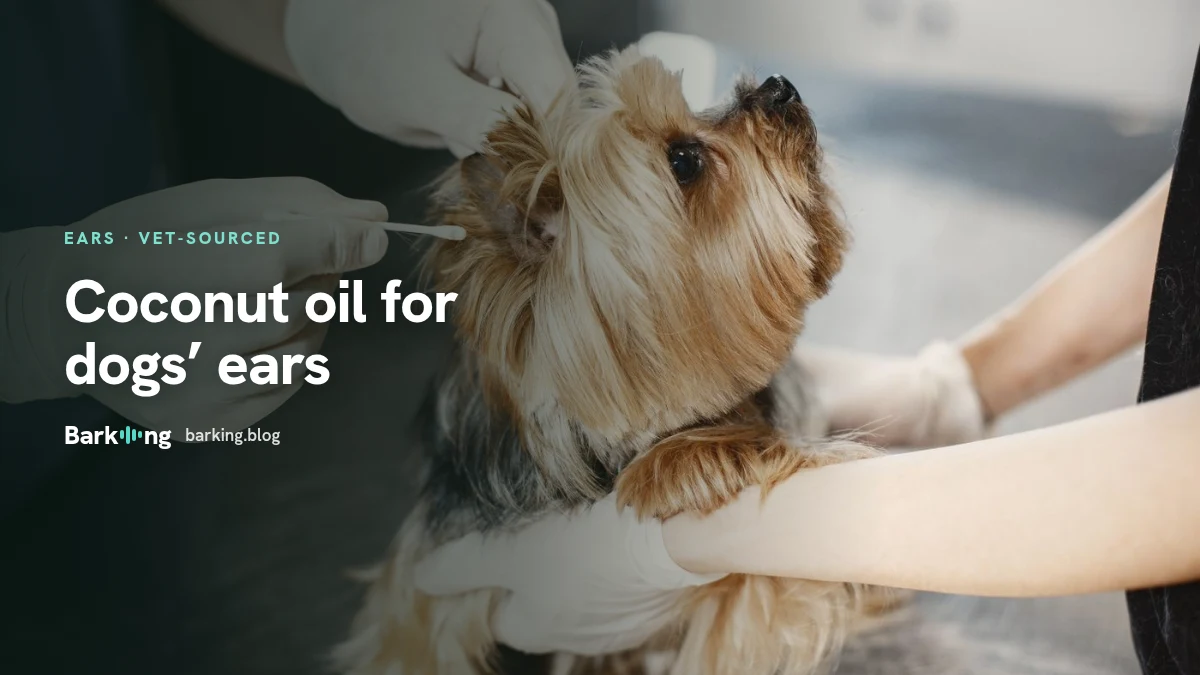
Quick answer
To apply coconut oil to your dog's ears, warm a small amount between your fingers, gently lift the ear flap, and massage a thin layer onto the inner surface. Never push anything into the ear canal. Coconut oil can soothe mild dryness, but it won't treat an ear infection, see your vet for that.
Knowing how to apply coconut oil to dogs’ ears properly can make the difference between soothing a mildly irritated ear and accidentally making a problem worse. Coconut oil is a popular natural remedy among dog owners for its moisturising and gentle antimicrobial properties, but ears are delicate, and getting the technique right matters.
Key Takeaway
Coconut oil can help moisturise dry ear flaps and soothe minor irritation, but it should only be applied to the visible part of the ear, never pushed into the ear canal. It is not a treatment for ear infections.
Why Coconut Oil Works for Dog Ear Care
Coconut oil is rich in lauric acid, a medium-chain fatty acid that has natural moisturising, antibacterial, and antifungal properties. When applied to the skin, it helps retain moisture and may offer a mild protective barrier against environmental irritants.
For dog ears specifically, coconut oil can be useful for:
- Dry, flaky ear flaps: common in winter or in centrally heated homes
- Minor irritation from allergens like pollen or dust
- Post-grooming dryness: some ear-cleaning solutions can strip natural oils
- Softening crusty edges on the ear tips, which some breeds are prone to
It’s important to understand what coconut oil can’t do. It won’t clear up a bacterial or yeast infection, it won’t remove deep wax buildup from the ear canal, and it won’t treat ear mites. These conditions all require veterinary intervention. Think of coconut oil as a gentle maintenance tool, not a medical treatment.
The MSD Veterinary Manual advises against using irritating home remedies, such as vinegar mixtures, on a dog's ear because they can worsen swelling and secretions and increase the risk of infection.
Verified sourceMSD Veterinary Manual · read the source →
Signs Your Dog’s Ears Could Benefit from Coconut Oil
Not every dog needs coconut oil on their ears. It’s most helpful when you notice:
- Visible dryness or flakiness on the inner ear flap
- Mild redness without discharge or odour
- Rough or cracked ear tips: especially in winter
- Occasional scratching that doesn’t seem persistent or distressed
If your dog’s ears look pink, clean, and comfortable, there’s no need to apply anything, healthy ears are self-maintaining. Over-treating healthy ears with oils can actually disrupt the natural balance and create moisture problems.
Breeds with large, floppy ears, Basset Hounds, Cocker Spaniels, Beagles, tend to have more ear issues due to reduced airflow. While coconut oil can help with surface dryness, these breeds need regular ear checks and proper cleaning as part of their routine care.
Step-by-Step: How to Apply Coconut Oil to Your Dog’s Ears
Follow these steps for safe, effective application:
What you’ll need:
- Virgin, cold-pressed coconut oil
- Cotton pads or a soft cloth
- Treats for positive reinforcement
Step 1: Prepare the coconut oil Scoop a small amount, roughly half a teaspoon, and warm it between your fingertips until it melts into a clear liquid. Coconut oil is solid below about 24°C, so body heat is usually enough.
Step 2: Get your dog comfortable Choose a calm moment when your dog is relaxed. Have them sit or lie down, and offer a treat to create a positive association. If your dog is anxious about ear handling, work on desensitisation gradually over several days before attempting application.
Step 3: Lift the ear flap Gently fold back the ear to expose the inner surface of the ear flap (the pinna). Take a moment to inspect the ear, if you see any discharge, strong odour, or significant redness, stop and consult your vet instead.
Step 4: Apply a thin layer Using your fingertip or a cotton pad, apply a thin layer of melted coconut oil to the inner surface of the ear flap. Massage gently in small circular motions. You’re aiming for a light coating, not a thick layer.
Step 5: Avoid the ear canal This is the most important step. Do not push your finger, cotton buds, or anything else into the ear canal. Stay on the visible, fleshy part of the ear flap only. The ear canal is L-shaped in dogs, and pushing substances in can cause impaction, irritation, or damage.
Step 6: Let your dog shake Your dog will almost certainly want to shake their head afterwards, that’s perfectly normal. It helps distribute the oil naturally and removes any excess.
How Often Should You Apply Coconut Oil?
For general maintenance and moisturising, once a week is a good starting point. If your dog’s ears are particularly dry or flaky, you can increase to twice a week for the first couple of weeks, then taper back to weekly.
Over-application is a real concern. Coconut oil is, well, an oil, and excess moisture in the ear creates a warm, damp environment where yeast and bacteria thrive. This is especially true for floppy-eared breeds where airflow is already limited.
A good rule of thumb: if the ear flap still feels oily when it’s time for the next application, you’re using too much or applying too frequently. The oil should absorb fully between sessions.
When to See the Vet Instead
Coconut oil is a gentle, supportive measure, not a cure-all. You should skip the home treatment and book a vet appointment if you notice:
- Dark brown or black discharge: could indicate ear mites or a yeast infection
- Foul smell: a strong, unpleasant odour usually signals infection
- Swelling or heat: the ear feels hot to the touch or looks puffy
- Persistent scratching or head shaking: beyond the brief shake after application
- Head tilting: your dog consistently holds their head to one side
- Whimpering or flinching when you touch the ear
- Bleeding or scabbing inside the ear
Ear infections in dogs can escalate quickly. What starts as mild discomfort can become a painful, deep-seated infection affecting the middle or inner ear if left untreated. Veterinarians typically diagnose ear infections with a simple otoscope examination and may take a swab to identify whether bacteria or yeast are responsible.
Coconut Oil Ear Care: A Simple Addition to Your Routine
Learning how to apply coconut oil to dogs’ ears is straightforward once you know the boundaries. Keep it to the visible ear flap, use a light touch, don’t overdo the frequency, and always defer to your vet when something looks or smells wrong.
For most dogs with mildly dry or irritated ears, a weekly coconut oil massage can be a soothing, bonding experience that supports healthy skin. Pair it with regular ear checks and you’ll catch any real problems long before they become serious.
If you’re interested in other ways to use coconut oil and natural remedies for your dog, have a look at our guide to mixing coconut oil and apple cider vinegar for dogs or our overview of which oils are safe for dogs.
Can coconut oil cure a dog ear infection?
No. While coconut oil has mild antimicrobial properties, it cannot treat an established ear infection. Ear infections require veterinary diagnosis and appropriate medication, usually antibiotic or antifungal ear drops. Using coconut oil instead of proper treatment could allow the infection to worsen.
How often should I put coconut oil in my dog's ears?
For general ear maintenance and moisturising, once a week is sufficient. If your dog's ears are particularly dry, you can apply it twice a week for the first fortnight, then reduce to weekly. Over-application can trap moisture and create conditions favourable for yeast growth.
Is coconut oil safe for all dog breeds' ears?
Coconut oil is generally safe for most breeds, but dogs with floppy ears, such as Cocker Spaniels, Basset Hounds, and Labradors, are more prone to ear infections due to reduced airflow. Use coconut oil sparingly on floppy-eared breeds and monitor closely for any signs of excess moisture.
What type of coconut oil should I use for my dog's ears?
Use virgin, cold-pressed, unrefined coconut oil. This type retains the highest concentration of lauric acid and beneficial compounds. Avoid refined coconut oil, which has been processed and may contain fewer active properties.
My dog keeps shaking its head after I apply coconut oil, is that normal?
A brief head shake immediately after application is normal, dogs are sensitive to the feeling of something in their ears. However, persistent head shaking, scratching, or whimpering could indicate irritation or an underlying ear problem. Stop application and consult your vet if symptoms continue.
The Barking newsletter
Get calmer, vet-sourced advice.
One friendly email when we publish something worth your dog’s while. No spam, no scares.