Coconut Oil for Dogs Teeth: A Complete Dental Care Guide
Learn how to use coconut oil for dogs teeth to support dental health, freshen breath, and soothe gums with simple at-home methods.
Quick answer
Coconut oil can be a helpful addition to your dog's dental care routine. Its natural antibacterial properties may help reduce plaque buildup and soothe inflamed gums when applied regularly, though it should complement, not replace, professional dental cleanings and proper tooth brushing.
If you’ve ever recoiled from your dog”s breath during a cuddle, you’re not alone. Dental health is one of the most overlooked aspects of canine care, and many owners are turning to natural options like coconut oil for dogs teeth as part of their grooming routine. But does it actually work, and how should you use it?
Key Takeaway
Coconut oil's natural antibacterial properties can support your dog''s dental health when used alongside regular brushing and professional cleanings, but it's a supplement, not a substitute.
Why Coconut Oil May Help Your Dog’s Dental Health
Coconut oil contains a fatty acid called lauric acid, which research suggests has antimicrobial and anti-inflammatory properties. When applied to your dog”s teeth and gums, it may help reduce the bacteria responsible for plaque buildup and bad breath.
Veterinary professionals note that the medium-chain fatty acids in coconut oil can create an environment less hospitable to harmful oral bacteria. Some dog owners report fresher breath and healthier-looking gums after incorporating coconut oil into their pet’s dental routine.
It’s worth noting that while coconut oil shows promise, it hasn’t been studied as extensively as conventional canine dental products. Think of it as a complementary tool rather than a primary treatment.
Brushing away plaque before it turns into solid tartar is the best way to prevent dental disease.
Verified sourcePDSA · read the source →
How to Apply Coconut Oil to Your Dog’s Teeth
Getting coconut oil onto your dog”s teeth doesn’t require any special equipment. Here are three straightforward methods:
Finger brushing: Wash your hands, scoop a small amount of coconut oil onto your fingertip, and gently rub it along the gum line and outer surfaces of your dog”s teeth. Most dogs tolerate this well because they enjoy the taste.
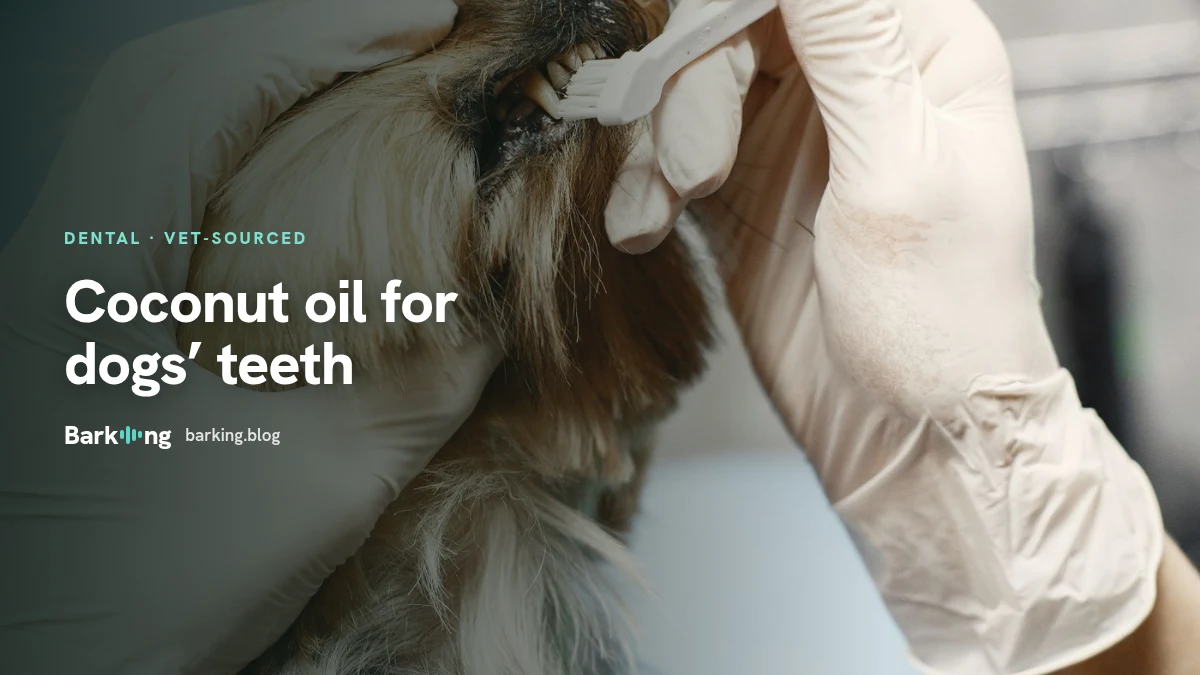
On a toothbrush or finger brush: Apply a thin layer of coconut oil to a dog-safe toothbrush or silicone finger brush. Brush using gentle circular motions, focusing on the back molars where plaque tends to accumulate most.
As a gum massage: For dogs who resist brushing, simply massage a small amount of coconut oil into the gums with your finger. This still allows the lauric acid to come into contact with oral bacteria, even if you can’t reach every tooth surface.
Aim to spend about 30 seconds on each side of the mouth. If your dog pulls away, take a break and try again later, forcing the issue will only make future sessions harder.
DIY Coconut Oil Dog Toothpaste Recipe
You can make a simple, dog-safe toothpaste at home with just a few ingredients. This paste combines the antibacterial benefits of coconut oil with gentle cleaning action.
Simple coconut oil toothpaste:
- 2 tablespoons virgin coconut oil (softened, not melted)
- 1 tablespoon baking soda (optional, provides mild abrasion)
- A few fresh mint or parsley leaves, finely chopped (for breath freshening)
Mix the ingredients together until you have a smooth paste. Store in a small jar at room temperature. The coconut oil will solidify in cooler weather, just warm the jar in your hands for a moment before use.
Important: Never use human toothpaste on your dog. It typically contains xylitol and fluoride, both of which are toxic to dogs. Stick to dog-safe ingredients only.
How Often Should You Use Coconut Oil for Dental Care?
Consistency matters more than frequency. Veterinary dental specialists generally recommend brushing your dog”s teeth daily with a proper canine toothpaste, but if you’re using coconut oil as a supplementary treatment, two to three times per week is a reasonable target.
Here’s a practical weekly routine:
- Daily: Brush with a veterinary-approved dog toothpaste
- 2-3 times per week: Follow up with a coconut oil application or use the DIY toothpaste above
- Monthly: Check your dog”s mouth for signs of redness, swelling, or broken teeth
- Annually: Schedule a professional dental check-up with your vet
The amount of coconut oil you use matters too. For small dogs, a quarter teaspoon per session is plenty. Medium dogs can have half a teaspoon, and large breeds up to one teaspoon. Using too much won’t improve results and may cause loose stools, as coconut oil is high in fat.
What Coconut Oil Can’t Replace
It’s important to be honest about the limitations. Coconut oil is not a miracle cure for canine dental disease, and relying on it alone could mean missing serious problems.
Coconut oil cannot:
- Remove existing tartar, only professional scaling under anaesthesia can do this safely
- Treat periodontal disease, this requires veterinary intervention
- Replace daily brushing with a proper canine toothpaste
- Substitute for annual dental check-ups
- Fix broken, loose, or infected teeth
Veterinary dentists estimate that the majority of dogs over three years old show some signs of dental disease. If your dog has persistent bad breath, bleeding gums, difficulty eating, or visible tartar buildup, book a vet appointment rather than reaching for the coconut oil.
If you’re interested in other ways to use coconut oil for your dog, check out our guide to coconut oil dog treats, a tasty way to incorporate this ingredient into your dog”s diet.
Signs Your Dog Needs Professional Dental Care
While coconut oil can support day-to-day dental hygiene, knowing when to seek professional help is crucial. Watch for these warning signs:
- Persistent bad breath that doesn’t improve with regular cleaning
- Red, swollen, or bleeding gums
- Yellow or brown buildup on the teeth
- Reluctance to eat hard food or chew toys
- Pawing at the mouth or face
- Drooling more than usual
- Loose or missing teeth
If you notice any of these signs, don’t delay, dental problems can worsen quickly and may affect your dog”s overall health. Bacteria from dental infections can enter the bloodstream and potentially impact the heart, liver, and kidneys.
Coconut oil is a lovely natural addition to your dog”s dental toolkit, but it works best as part of a complete care plan. Pair it with daily brushing, dental chews, and regular vet visits for the freshest breath and healthiest smile your dog can have.
Is coconut oil safe for dogs teeth and gums?
Yes, virgin coconut oil is generally safe for dogs when used in small amounts for dental care. It contains lauric acid, which has natural antibacterial properties. However, introduce it gradually and consult your vet if your dog has pancreatitis or is prone to weight gain.
How often should I put coconut oil on my dogs teeth?
Most veterinary professionals suggest applying coconut oil to your dog's teeth two to three times per week as part of a broader dental routine. Daily brushing with a dog-safe toothpaste remains the gold standard for dental care.
Can coconut oil remove tartar from dogs teeth?
Coconut oil may help slow plaque buildup, but it cannot remove hardened tartar. Once tartar has formed, only a professional veterinary dental cleaning can safely remove it. Coconut oil works best as a preventative measure alongside regular brushing.
What type of coconut oil is best for dogs teeth?
Choose organic, virgin, cold-pressed coconut oil. This type retains the highest levels of lauric acid and beneficial compounds. Avoid refined or hydrogenated coconut oil, as processing can strip away the properties that make it useful for dental care.
Can puppies have coconut oil on their teeth?
Coconut oil is generally safe for puppies over 12 weeks old in very small amounts. Start with a tiny dab on your finger and let them lick it off to check for any digestive sensitivity before using it on their teeth and gums.
The Barking newsletter
Get calmer, vet-sourced advice.
One friendly email when we publish something worth your dog’s while. No spam, no scares.